
How Difficult Is the Roofer Ausbildung for Indian Students?
Roofer Ausbildung for Indian students
Germany’s dual vocational training system, known as Ausbildung, has become one of the most attractive career pathways for international students, especially Indians looking for stable, respected, and well-paid technical careers. Among the many skilled trades available, the Roofer Ausbildung (Dachdecker Ausbildung) stands out as one of the most challenging yet rewarding training programs.
Roofers play an essential role in Germany’s construction and housing sector, working on rooftops to install, repair, renovate, and maintain various roofing systems. With Germany’s growing demand for skilled workers in the construction industry, the roofer profession offers excellent job security, long-term career growth, and a stable income.
However, many Indian students ask a crucial question:
“How difficult is the Roofer Ausbildung for Indian students?”
This detailed blog explores the complete reality — the physical demands, work conditions, language requirements, training difficulty, cultural differences, and overall challenges — as well as why thousands of students still successfully complete this program every year.
The goal is to give you a practical, honest, and in-depth understanding (2500+ words) of what to expect so you can make an informed career choice.
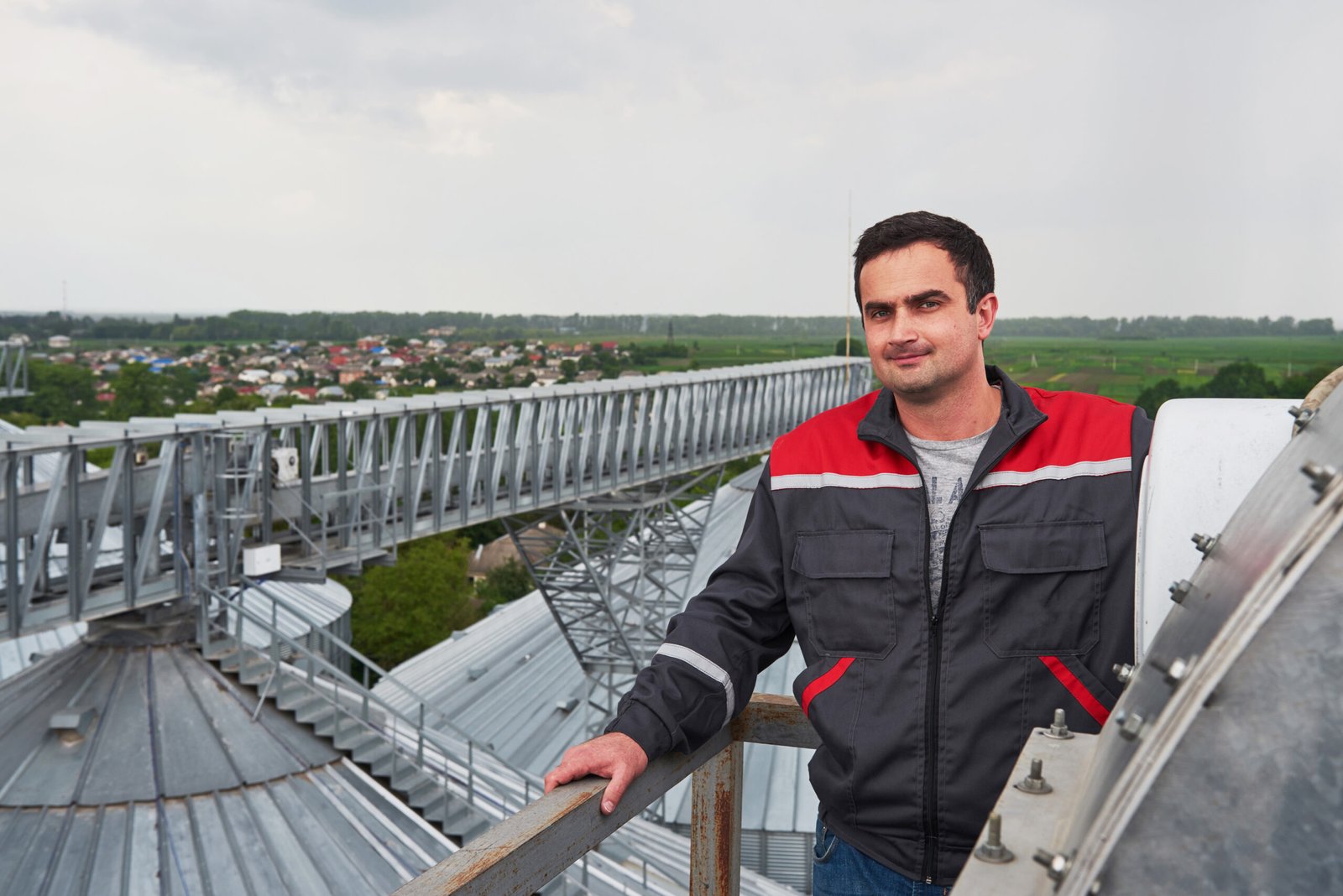
What Is the Roofer Ausbildung?
The roofer Ausbildung trains students to become professional roofers (Dachdecker) in Germany. It is a three-year dual vocational training program, combining:
- On-site practical training at a roofing company
- Theoretical classes at a vocational school (Berufsschule)
During the training, students learn to:
- Install and repair roofs
- Use different roofing materials like tiles, slate, metal sheets, or insulation
- Measure and plan rooftop structures
- Waterproof roofs to prevent leakage
- Install drainage systems
- Work safely at heights
- Maintain old and historical roofs
- Use modern roofing tools and machines
Once completed, you receive a nationally recognized qualification as a roofer (Dachdecker Geselle), valid across Germany and Europe.
Is the Roofer Ausbildung Difficult for Indian Students?
The honest answer:
Yes, the Roofer Ausbildung is challenging — but not impossible.
Many Indian students complete it successfully every year. The difficulty level depends on:
- Physical ability
- Comfort with heights
- Weather adaptability
- Knowledge of German language
- Discipline and work ethic
- Willingness to learn a hands-on trade
Let’s break down every difficulty in detail.
1. Physical Difficulty Level
Is roofer Ausbildung physically hard?
Yes, roofing is considered one of the most physically demanding Ausbildungen in Germany.
Why?
Because the job involves:
- Carrying heavy materials
- Working on steep roofs
- Climbing ladders
- Standing and bending for long hours
- Working outdoors in different weather conditions
- Handling large tools and machines
Indian students who are not used to physically intensive work may find this challenging in the beginning.
However, with time, your body adapts and you gain:
- Strength
- Stamina
- Balance
- Speed
- Practical skills
German companies also train you in safety, fitness, and correct posture, so you gain confidence with experience.
Final Verdict on Physical Difficulty:
Challenging in the beginning, but manageable with practice and fitness.
2. Working at Heights
This is the biggest difficulty for many Indian students.
Roofers work on:
- High buildings
- Steep roofs
- Unstable structures
- Edges and slopes
If you are afraid of heights (acrophobia), this job will be extremely difficult.
However, if you are comfortable being high up and enjoy outdoor work, you may find it exciting and adventurous.
Can Indian students overcome fear of heights?
Yes — with proper training and safety equipment:
- Harness
- Helmet
- Rope system
- Anti-slip shoes
- Support scaffolding
Germany has some of the strictest safety standards in the world, so injuries are rare.
Final Verdict on Height Difficulty:
If you fear heights, it’s hard. If not, it becomes enjoyable.
3. Weather Challenges
Germany’s weather is very different from India.
Roofers must work in:
- Cold winter temperatures
- Mild snow
- Rainy weather
- Strong winds
- Hot summer days
Work may stop during storms or heavy snow, but roofers must still adapt to different conditions.
Indian students often find cold weather the hardest part, especially during the first year.
However, high-quality winter clothing, thermal layers, and safety gear make it manageable.
Final Verdict on Weather Difficulty:
Moderate difficulty. Takes 3–6 months to adjust.
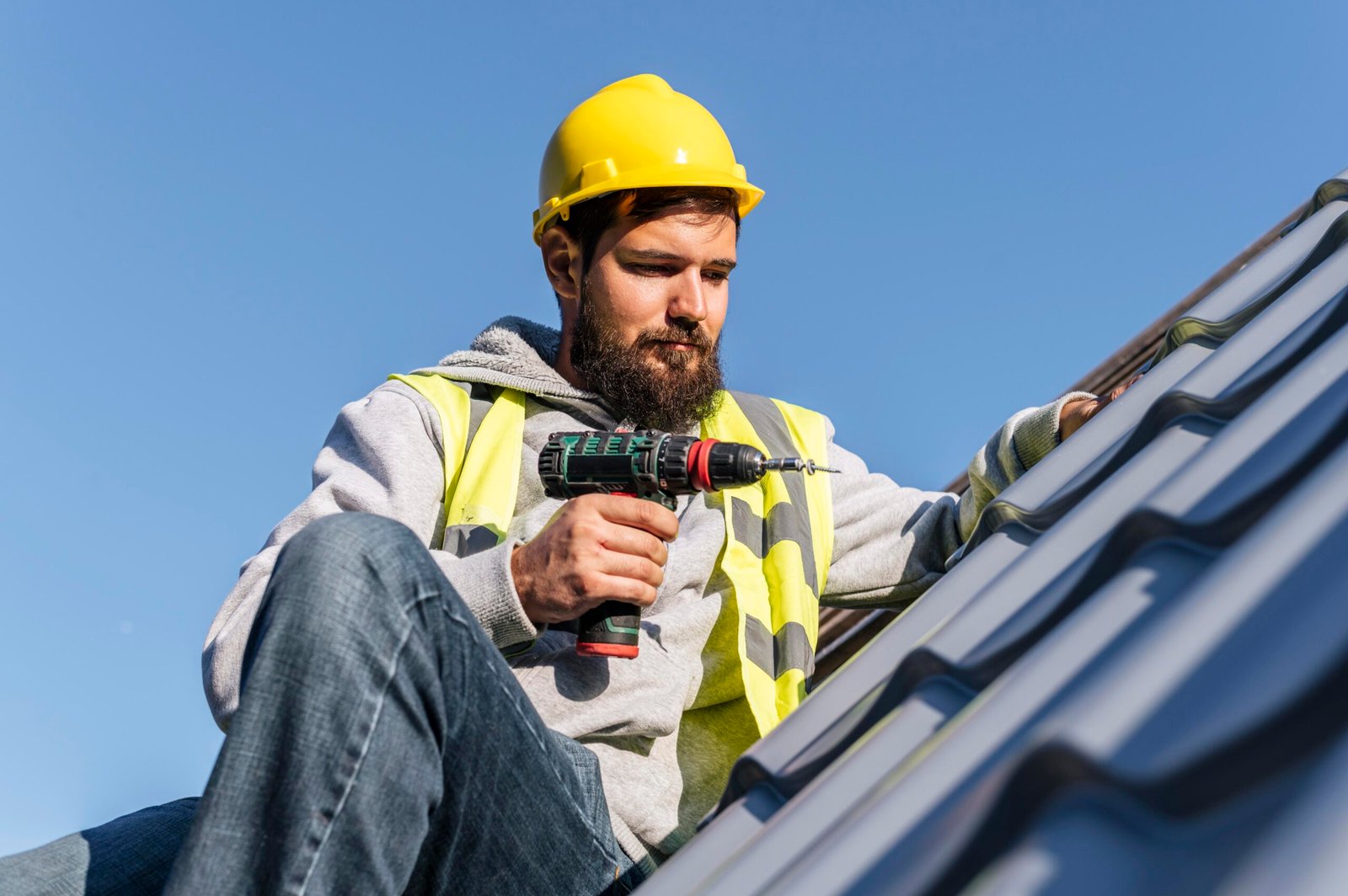
4. Technical Skills Difficulty
Roofer Ausbildung teaches many technical skills such as:
- Cutting roof tiles
- Measuring exact angles
- Waterproofing
- Installing insulation
- Reading construction plans
- Using power tools
- Understanding roofing materials
Indian students who have never done technical or mechanical work may find the beginning difficult.
But the Berufsschule teachers start with very basic, beginner-level lessons, and trainers help you daily in practical sessions.
Final Verdict on Technical Skills Difficulty:
Medium difficulty — easy to learn with practice and guidance.
5. German Language Requirement Difficulty
This might be the most important part.
Required German level:
- Minimum B1 to start Ausbildung
- Many companies accept B1 but prefer B2
- Berufsschule lessons are in German
- Safety instructions are in German
- Worksite communication is in German
Indian students who struggle with German may face difficulties such as:
- Understanding technical words
- Reading safety signs
- Communicating with co-workers
- Writing Berufsschule exams
However, students who reach B1/B2 level before coming to Germany manage well.
Final Verdict on Language Difficulty:
Medium to high difficulty — depends on your German level.
6. Cultural Differences for Indian Students
German workplaces operate differently from Indian environments.
Challenges Indian students may face:
1. Punctuality
Germany is extremely punctual.
Even 1 minute late can be considered unprofessional.
2. Direct communication
Germans speak directly — not rude, just honest.
Indian students sometimes misunderstand this.
3. Work discipline
German companies:
- Follow strict rules
- Have organized work processes
- Maintain safety protocols
- Expect consistency
4. Independence
You must cook, clean, and manage life independently.
5. Weekend culture
Sunday is a complete holiday — shops closed — takes time to adjust.
Final Verdict on Culture Difficulty:
Moderate difficulty — improves as you adapt to German lifestyle.
7. Berufsschule (Vocational School) Difficulty
The vocational school part can be challenging because:
- Entirely in German
- Technical vocabulary
- Mathematics for measurements
- Physics for insulation and heat
- Writing assignments
- Classroom tests
Indian students who studied science or math in school find this easier.
Those from non-science backgrounds may need extra study time.
Teachers are supportive and used to having international students, which helps a lot.
Final Verdict on School Difficulty:
Moderate difficulty — manageable with study discipline.
8. Finding a Roofer Ausbildung Company
Some Ausbildung programs are difficult to get, but roofer Ausbildung is one of the easiest to secure, even for international applicants.
Why?
Because:
- Germany has a shortage of roofers
- Many workers are retiring
- Fewer Germans want physically demanding jobs
- Companies actively hire international trainees
This makes it easier for Indian students to receive a training contract.
Final Verdict on Company Selection Difficulty:
Low difficulty — high chance of selection.
9. Salary During Roofer Ausbildung
This improves motivation and reduces difficulty because trainees earn well.
Average Monthly Stipend:
- 1st Year: €900 – €1,050
- 2nd Year: €1,100 – €1,250
- 3rd Year: €1,300 – €1,500
This stipend is higher than many other Ausbildungen.
After completion:
Qualified roofers earn €2,800 – €3,500 per month.
With experience, it can reach €4,000+.
Good salary makes the training worth the difficulty.
10. Job Security After Ausbildung
This reduces overall stress because:
- Demand for roofers is high
- Germany needs skilled construction workers
- Companies prefer long-term employees
- Immigration rules support skilled trades
Indian students completing Dachdecker Ausbildung almost always receive long-term jobs.
Advantages That Reduce Difficulty
Even though this Ausbildung is challenging, many benefits make it easier to manage.
1. Strong demand = less competition
Companies support trainees.
2. Mentorship from experienced roofers
You are trained step by step.
3. Safety is top priority
Advanced equipment and protective gear reduce risks.
4. Hands-on learning
Better than sitting in a classroom all day.
5. Early financial independence
You start earning from day one.
6. Internationally recognized qualification
Career opportunities even outside Germany.
Who Should Choose Roofer Ausbildung?
This Ausbildung is ideal for Indian students who:
- Enjoy physical, outdoor work
- Are comfortable at heights
- Like hands-on tasks
- Want a high-demand job
- Prefer practical learning
- Are disciplined and hardworking
- Want a stable job in Germany
Who Should Avoid Roofer Ausbildung?
It may not be suitable if you:
- Are afraid of heights
- Struggle with cold weather
- Prefer office-based jobs
- Have physical limitations
- Are not disciplined
- Do not want to learn advanced German
- Dislike manual labor
How Indian Students Can Reduce the Difficulty
1. Improve your German before arriving
Aim for B1 or B2.
2. Build physical fitness
Practice walking, climbing, and light weight training.
3. Watch roofing videos
Understand the tools and techniques.
4. Arrive mentally prepared
The first months are always the hardest.
5. Make German friends
They help with language and work guidance.
6. Learn punctuality and discipline
This is critical for success.
7. Choose proper clothing
Good shoes and winter jackets make a big difference.
Is It Worth Doing Roofer Ausbildung as an Indian Student?
Absolutely YES, if you fit the job profile.
Reasons it is worth it:
- High demand
- Good salary
- Excellent job security
- Fast career growth
- Chance to become a foreman or master roofer
- Opportunities to start your own business
- Stable future in Germany
- Respect in the construction industry
The difficulty is real, but so are the rewards.
Conclusion
So, how difficult is the Roofer Ausbildung for Indian students?
The truth is:
It is moderately to highly difficult, especially in the first year.
The main challenges are:
- Physical strength
- Working at heights
- Cold weather
- German language
- Cultural adjustment
- Technical skills
But thousands of Indian students overcome these challenges successfully every year.
The difficulty becomes manageable when:
- You are physically active
- You are motivated
- You prepare your German language
- You accept the cultural differences
- You are mentally strong and disciplined
If you are looking for a secure, well-paid, and respected technical career in Germany, the Roofer Ausbildung is a powerful opportunity.
It demands hard work, but it gives excellent rewards, long-term stability, and a bright future.
Germany’s dual vocational training system, known as Ausbildung, has become one of the most attractive career pathways for international students, especially Indians looking for stable, respected, and well-paid technical careers. Among the many skilled trades available, the Roofer Ausbildung (Dachdecker Ausbildung) stands out as one of the most challenging yet rewarding training programs.
Roofers play an essential role in Germany’s construction and housing sector, working on rooftops to install, repair, renovate, and maintain various roofing systems. With Germany’s growing demand for skilled workers in the construction industry, the roofer profession offers excellent job security, long-term career growth, and a stable income.
However, many Indian students ask a crucial question:
“How difficult is the Roofer Ausbildung for Indian students?”
This detailed blog explores the complete reality — the physical demands, work conditions, language requirements, training difficulty, cultural differences, and overall challenges — as well as why thousands of students still successfully complete this program every year.
The goal is to give you a practical, honest, and in-depth understanding (2500+ words) of what to expect so you can make an informed career choice.
What Is the Roofer Ausbildung?
The roofer Ausbildung trains students to become professional roofers (Dachdecker) in Germany. It is a three-year dual vocational training program, combining:
- On-site practical training at a roofing company
- Theoretical classes at a vocational school (Berufsschule)
During the training, students learn to:
- Install and repair roofs
- Use different roofing materials like tiles, slate, metal sheets, or insulation
- Measure and plan rooftop structures
- Waterproof roofs to prevent leakage
- Install drainage systems
- Work safely at heights
- Maintain old and historical roofs
- Use modern roofing tools and machines
Once completed, you receive a nationally recognized qualification as a roofer (Dachdecker Geselle), valid across Germany and Europe.
Is the Roofer Ausbildung Difficult for Indian Students?
The honest answer:
Yes, the Roofer Ausbildung is challenging — but not impossible.
Many Indian students complete it successfully every year. The difficulty level depends on:
- Physical ability
- Comfort with heights
- Weather adaptability
- Knowledge of German language
- Discipline and work ethic
- Willingness to learn a hands-on trade
Let’s break down every difficulty in detail.
1. Physical Difficulty Level
Is roofer Ausbildung physically hard?
Yes, roofing is considered one of the most physically demanding Ausbildungen in Germany.
Why?
Because the job involves:
- Carrying heavy materials
- Working on steep roofs
- Climbing ladders
- Standing and bending for long hours
- Working outdoors in different weather conditions
- Handling large tools and machines
Indian students who are not used to physically intensive work may find this challenging in the beginning.
However, with time, your body adapts and you gain:
- Strength
- Stamina
- Balance
- Speed
- Practical skills
German companies also train you in safety, fitness, and correct posture, so you gain confidence with experience.
Final Verdict on Physical Difficulty:
Challenging in the beginning, but manageable with practice and fitness.
2. Working at Heights
This is the biggest difficulty for many Indian students.
Roofers work on:
- High buildings
- Steep roofs
- Unstable structures
- Edges and slopes
If you are afraid of heights (acrophobia), this job will be extremely difficult.
However, if you are comfortable being high up and enjoy outdoor work, you may find it exciting and adventurous.
Can Indian students overcome fear of heights?
Yes — with proper training and safety equipment:
- Harness
- Helmet
- Rope system
- Anti-slip shoes
- Support scaffolding
Germany has some of the strictest safety standards in the world, so injuries are rare.
Final Verdict on Height Difficulty:
If you fear heights, it’s hard. If not, it becomes enjoyable.
3. Weather Challenges
Germany’s weather is very different from India.
Roofers must work in:
- Cold winter temperatures
- Mild snow
- Rainy weather
- Strong winds
- Hot summer days
Work may stop during storms or heavy snow, but roofers must still adapt to different conditions.
Indian students often find cold weather the hardest part, especially during the first year.
However, high-quality winter clothing, thermal layers, and safety gear make it manageable.
Final Verdict on Weather Difficulty:
Moderate difficulty. Takes 3–6 months to adjust.
4. Technical Skills Difficulty
Roofer Ausbildung teaches many technical skills such as:
- Cutting roof tiles
- Measuring exact angles
- Waterproofing
- Installing insulation
- Reading construction plans
- Using power tools
- Understanding roofing materials
Indian students who have never done technical or mechanical work may find the beginning difficult.
But the Berufsschule teachers start with very basic, beginner-level lessons, and trainers help you daily in practical sessions.
Final Verdict on Technical Skills Difficulty:
Medium difficulty — easy to learn with practice and guidance.
5. German Language Requirement Difficulty
This might be the most important part.
Required German level:
- Minimum B1 to start Ausbildung
- Many companies accept B1 but prefer B2
- Berufsschule lessons are in German
- Safety instructions are in German
- Worksite communication is in German
Indian students who struggle with German may face difficulties such as:
- Understanding technical words
- Reading safety signs
- Communicating with co-workers
- Writing Berufsschule exams
However, students who reach B1/B2 level before coming to Germany manage well.
Final Verdict on Language Difficulty:
Medium to high difficulty — depends on your German level.
6. Cultural Differences for Indian Students
German workplaces operate differently from Indian environments.
Challenges Indian students may face:
1. Punctuality
Germany is extremely punctual.
Even 1 minute late can be considered unprofessional.
2. Direct communication
Germans speak directly — not rude, just honest.
Indian students sometimes misunderstand this.
3. Work discipline
German companies:
- Follow strict rules
- Have organized work processes
- Maintain safety protocols
- Expect consistency
4. Independence
You must cook, clean, and manage life independently.
5. Weekend culture
Sunday is a complete holiday — shops closed — takes time to adjust.
Final Verdict on Culture Difficulty:
Moderate difficulty — improves as you adapt to German lifestyle.
7. Berufsschule (Vocational School) Difficulty
The vocational school part can be challenging because:
- Entirely in German
- Technical vocabulary
- Mathematics for measurements
- Physics for insulation and heat
- Writing assignments
- Classroom tests
Indian students who studied science or math in school find this easier.
Those from non-science backgrounds may need extra study time.
Teachers are supportive and used to having international students, which helps a lot.
Final Verdict on School Difficulty:
Moderate difficulty — manageable with study discipline.
8. Finding a Roofer Ausbildung Company
Some Ausbildung programs are difficult to get, but roofer Ausbildung is one of the easiest to secure, even for international applicants.
Why?
Because:
- Germany has a shortage of roofers
- Many workers are retiring
- Fewer Germans want physically demanding jobs
- Companies actively hire international trainees
This makes it easier for Indian students to receive a training contract.
Final Verdict on Company Selection Difficulty:
Low difficulty — high chance of selection.
9. Salary During Roofer Ausbildung
This improves motivation and reduces difficulty because trainees earn well.
Average Monthly Stipend:
- 1st Year: €900 – €1,050
- 2nd Year: €1,100 – €1,250
- 3rd Year: €1,300 – €1,500
This stipend is higher than many other Ausbildungen.
After completion:
Qualified roofers earn €2,800 – €3,500 per month.
With experience, it can reach €4,000+.
Good salary makes the training worth the difficulty.
10. Job Security After Ausbildung
This reduces overall stress because:
- Demand for roofers is high
- Germany needs skilled construction workers
- Companies prefer long-term employees
- Immigration rules support skilled trades
Indian students completing Dachdecker Ausbildung almost always receive long-term jobs.
Advantages That Reduce Difficulty
Even though this Ausbildung is challenging, many benefits make it easier to manage.
1. Strong demand = less competition
Companies support trainees.
2. Mentorship from experienced roofers
You are trained step by step.
3. Safety is top priority
Advanced equipment and protective gear reduce risks.
4. Hands-on learning
Better than sitting in a classroom all day.
5. Early financial independence
You start earning from day one.
6. Internationally recognized qualification
Career opportunities even outside Germany.
Who Should Choose Roofer Ausbildung?
This Ausbildung is ideal for Indian students who:
- Enjoy physical, outdoor work
- Are comfortable at heights
- Like hands-on tasks
- Want a high-demand job
- Prefer practical learning
- Are disciplined and hardworking
- Want a stable job in Germany
Who Should Avoid Roofer Ausbildung?
It may not be suitable if you:
- Are afraid of heights
- Struggle with cold weather
- Prefer office-based jobs
- Have physical limitations
- Are not disciplined
- Do not want to learn advanced German
- Dislike manual labor
How Indian Students Can Reduce the Difficulty
1. Improve your German before arriving
Aim for B1 or B2.
2. Build physical fitness
Practice walking, climbing, and light weight training.
3. Watch roofing videos
Understand the tools and techniques.
4. Arrive mentally prepared
The first months are always the hardest.
5. Make German friends
They help with language and work guidance.
6. Learn punctuality and discipline
This is critical for success.
7. Choose proper clothing
Good shoes and winter jackets make a big difference.
Is It Worth Doing Roofer Ausbildung as an Indian Student?
Absolutely YES, if you fit the job profile.
Reasons it is worth it:
- High demand
- Good salary
- Excellent job security
- Fast career growth
- Chance to become a foreman or master roofer
- Opportunities to start your own business
- Stable future in Germany
- Respect in the construction industry
The difficulty is real, but so are the rewards.
Conclusion
So, how difficult is the Roofer Ausbildung for Indian students?
The truth is:
It is moderately to highly difficult, especially in the first year.
The main challenges are:
- Physical strength
- Working at heights
- Cold weather
- German language
- Cultural adjustment
- Technical skills
But thousands of Indian students overcome these challenges successfully every year.
The difficulty becomes manageable when:
- You are physically active
- You are motivated
- You prepare your German language
- You accept the cultural differences
- You are mentally strong and disciplined
If you are looking for a secure, well-paid, and respected technical career in Germany, the Roofer Ausbildung is a powerful opportunity.
It demands hard work, but it gives excellent rewards, long-term stability, and a bright future.
For official details about vocational training regulations and wages, you can visit the Federal Employment Agency’s Ausbildung Portal or the Make It In Germany website.