
What Are the Types of Mechanic Ausbildung Programs in Germany?
Mechanic Ausbildung in Germany
Germany is globally recognized for its strong vocational training system known as “Ausbildung.” This dual education system combines classroom learning with hands-on training, ensuring that students not only gain theoretical knowledge but also acquire the practical skills needed for real-world jobs.
Among the numerous fields available under the Ausbildung program, mechanic-related training programs are some of the most popular and in-demand. Mechanics form the backbone of the country’s industrial, automotive, and technical sectors. From repairing vehicles and machinery to maintaining aircraft and electronic systems, mechanics keep Germany’s economy running smoothly.
If you are someone who loves working with tools, solving technical problems, and understanding how machines operate, then pursuing a mechanic Ausbildung in Germany could be the perfect choice for you.
In this detailed guide, we will explore the different types of mechanic Ausbildung programs in Germany, their duration, structure, career opportunities, stipend, and job prospects. By the end of this article, you will clearly understand which specialization suits your interests and what career path you can build in this field.
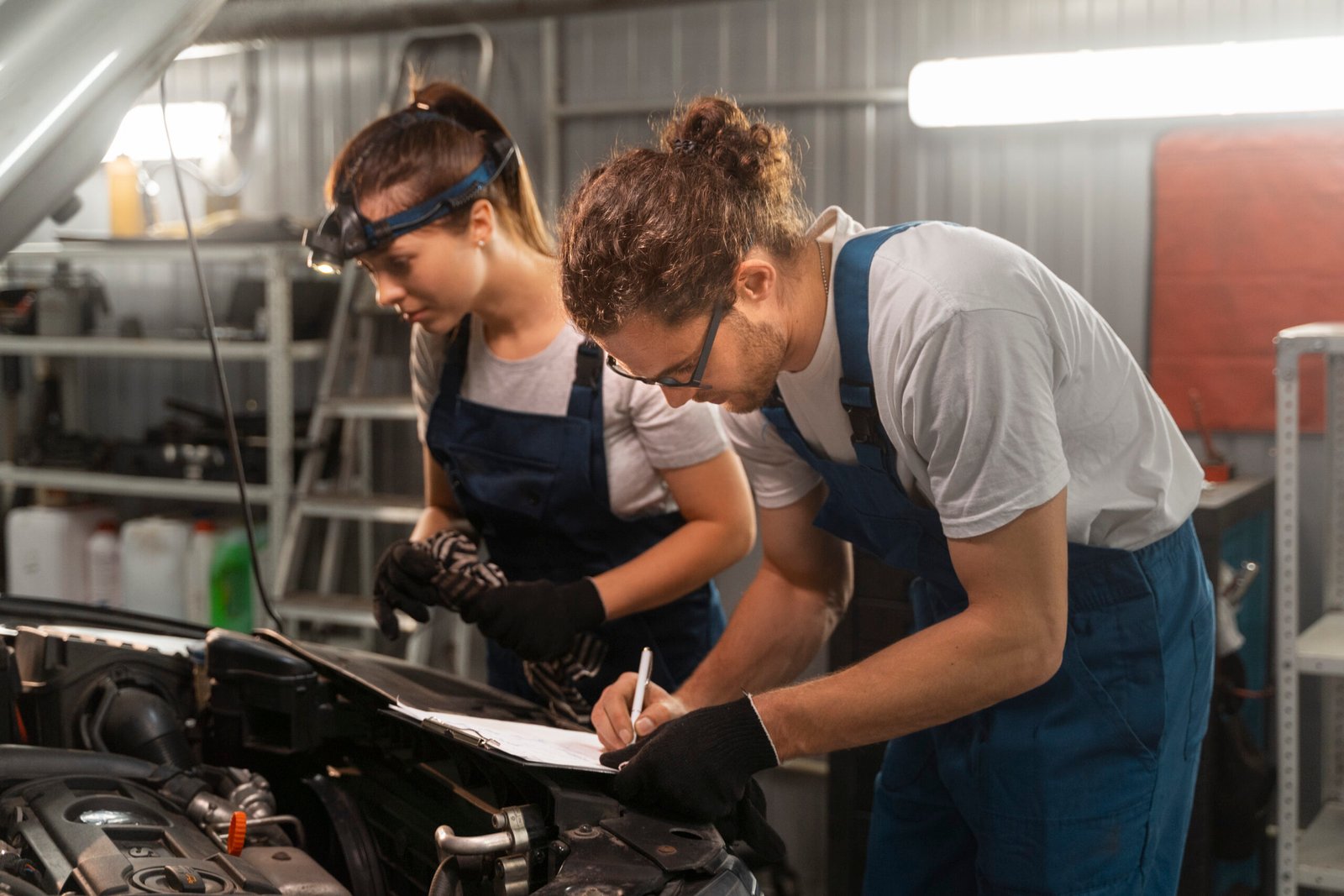
Understanding the Mechanic Ausbildung System in Germany
The German Ausbildung system follows a dual model, meaning that trainees split their time between:
- A vocational school (Berufsschule) for classroom-based learning
- A training company (Ausbildungsbetrieb) for practical experience
This system ensures that students learn both theory and hands-on application simultaneously, making them job-ready upon completion.
Duration
Most mechanic-related Ausbildung programs last three to three and a half years. In some cases, exceptional students can shorten their training to 2.5 years through good performance or prior experience.
Qualification
After completion, trainees receive an officially recognized certificate, such as Geselle (Journeyman) or Facharbeiter (Skilled Worker), which allows them to work anywhere in Germany or the European Union.
Types of Mechanic Ausbildung Programs in Germany
The term “mechanic” in Germany covers a broad range of technical professions. Let’s explore the most common and high-demand types of mechanic Ausbildung programs available.
1. Automotive Mechanic (Kfz-Mechatroniker/in)
One of the most popular mechanic Ausbildung programs is the Automotive Mechatronics Technician, or Kfz-Mechatroniker in German. This profession combines mechanical engineering and electronics, focusing on modern vehicles that rely heavily on computerized systems.
Training Focus
- Diagnosing and repairing vehicle engines, transmissions, and electrical systems
- Performing maintenance on cars, trucks, and motorcycles
- Installing and testing electronic components like sensors and control systems
- Conducting emissions and safety tests
Duration
3.5 years
Specializations
During training, you can specialize in one of the following areas:
- Passenger car systems
- Commercial vehicles
- Motorcycle technology
- Bodywork technology
- High-voltage systems (electric and hybrid vehicles)
Average Monthly Stipend
- 1st Year: €880 – €1,000
- 2nd Year: €950 – €1,100
- 3rd Year: €1,050 – €1,200
- 4th Year: €1,200 – €1,350
Career Opportunities
Graduates can work in car dealerships, service centers, manufacturing plants, or become self-employed garage owners. With additional qualifications, one can become a Master Technician (Kfz-Meister) or Automotive Engineer.
2. Industrial Mechanic (Industriemechaniker/in)
The Industrial Mechanic Ausbildung is designed for those who want to work in factories, production plants, and industrial facilities. This program focuses on the manufacturing and maintenance of machines used in industrial production.
Training Focus
- Assembling, operating, and maintaining industrial machines
- Troubleshooting mechanical issues in production lines
- Reading and interpreting technical drawings
- Using CNC machines and precision instruments
Duration
3.5 years
Skills You Learn
- Machining (turning, milling, drilling)
- Welding and fitting components
- Pneumatic and hydraulic systems maintenance
Average Monthly Stipend
- 1st Year: €950 – €1,050
- 2nd Year: €1,050 – €1,150
- 3rd Year: €1,150 – €1,250
- 4th Year: €1,250 – €1,400
Career Opportunities
After completion, you can work in manufacturing plants, engineering firms, and mechanical workshops. Many graduates also advance to Maintenance Supervisor or Production Manager roles with experience.
3. Aircraft Mechanic (Fluggerätmechaniker/in)
For those passionate about aviation, the Aircraft Mechanic Ausbildung is an exciting and specialized training program. Trainees learn to inspect, maintain, and repair aircraft systems, ensuring safety and reliability.
Training Focus
- Maintenance and repair of aircraft engines and systems
- Inspection of airframes, hydraulics, and avionics
- Applying strict safety and documentation standards
- Testing flight control systems
Duration
3.5 years
Specializations
- Aircraft manufacturing
- Maintenance technology
- Engine technology
Average Monthly Stipend
- 1st Year: €1,000 – €1,100
- 2nd Year: €1,100 – €1,200
- 3rd Year: €1,200 – €1,350
- 4th Year: €1,400 – €1,500
Career Opportunities
Graduates can work for airlines, aircraft maintenance companies, or aerospace manufacturers. Over time, they can move into inspection or engineering roles.
4. Bicycle Mechanic (Zweiradmechatroniker/in)
With the growing trend of eco-friendly transport and e-bikes, the Bicycle Mechanic Ausbildung has become increasingly popular in Germany. Trainees learn to repair and maintain bicycles, scooters, and e-bikes.
Training Focus
- Repairing mechanical and electronic bicycle systems
- Installing brakes, gears, and electrical assistance systems
- Customer service and sales of bicycle components
Duration
3.5 years
Average Monthly Stipend
- 1st Year: €850 – €950
- 2nd Year: €950 – €1,050
- 3rd Year: €1,050 – €1,200
Career Opportunities
You can work in bicycle workshops, retail stores, or e-bike manufacturing companies. Some mechanics open their own workshops after gaining experience.
5. Plumbing and Heating Mechanic (Anlagenmechaniker/in für Sanitär-, Heizungs- und Klimatechnik)
This Ausbildung focuses on installing and maintaining plumbing, heating, and air conditioning systems. These professionals ensure that buildings have functional and energy-efficient systems.
Training Focus
- Installing water, heating, and ventilation systems
- Maintaining and repairing pipelines and valves
- Ensuring compliance with environmental and safety standards
- Modernizing existing systems with energy-saving technologies
Duration
3.5 years
Average Monthly Stipend
- 1st Year: €880 – €1,000
- 2nd Year: €1,000 – €1,100
- 3rd Year: €1,100 – €1,250
- 4th Year: €1,250 – €1,400
Career Opportunities
After training, you can work in construction companies, maintenance firms, or energy service providers. With further qualification, you can become a Master Craftsman (Meister) and start your own installation business.
6. Precision Mechanic (Feinwerkmechaniker/in)
Precision mechanics specialize in crafting and maintaining high-accuracy components for machines, tools, and measuring instruments. This Ausbildung is ideal for those who enjoy working with fine details and advanced machinery.
Training Focus
- Manufacturing precision parts using CNC and manual machines
- Assembly and testing of mechanical and electronic components
- Measuring and quality assurance using high-precision tools
Duration
3.5 years
Average Monthly Stipend
- 1st Year: €930 – €1,050
- 2nd Year: €1,050 – €1,150
- 3rd Year: €1,150 – €1,250
- 4th Year: €1,250 – €1,400
Career Opportunities
Precision mechanics work in tool-making, medical equipment production, or instrument manufacturing. Many advance into CNC programming, quality control, or product design roles.
7. Agricultural and Construction Machinery Mechanic (Land- und Baumaschinenmechatroniker/in)
This Ausbildung focuses on repairing large machines used in farming and construction, such as tractors, harvesters, excavators, and cranes.
Training Focus
- Maintenance of hydraulic, pneumatic, and electronic systems
- Repairing engines and drive systems in heavy machinery
- Field service operations for machine breakdowns
Duration
3.5 years
Average Monthly Stipend
- 1st Year: €950 – €1,050
- 2nd Year: €1,050 – €1,150
- 3rd Year: €1,200 – €1,350
- 4th Year: €1,300 – €1,450
Career Opportunities
Graduates can work for agricultural equipment manufacturers, dealerships, or construction companies. The profession offers great job security due to the ongoing demand in both agriculture and infrastructure sectors.
8. Metal Worker Mechanic (Metallbauer/in)
Metalworking mechanics specialize in fabricating and assembling metal structures such as doors, windows, staircases, and railings. It combines craftsmanship with industrial techniques.
Training Focus
- Cutting, shaping, and joining metal components
- Welding and fitting metal parts
- Reading technical blueprints
- Working with steel, aluminum, and other materials
Duration
3.5 years
Average Monthly Stipend
- 1st Year: €900 – €1,000
- 2nd Year: €1,000 – €1,100
- 3rd Year: €1,150 – €1,250
- 4th Year: €1,250 – €1,400
Career Opportunities
You can work in metal fabrication workshops, construction firms, or steel industries. With further training, you can specialize in welding technology or become a Metal Construction Master (Metallbaumeister).
9. Mechatronics Technician (Mechatroniker/in)
This Ausbildung combines mechanics, electronics, and IT. Mechatronics technicians work on machines that integrate these technologies — from robotic systems to automated production lines.
Training Focus
- Assembly and maintenance of mechatronic systems
- Programming and operating control systems
- Troubleshooting mechanical and electrical issues
- Automation and robotics
Duration
3.5 years
Average Monthly Stipend
- 1st Year: €950 – €1,050
- 2nd Year: €1,050 – €1,150
- 3rd Year: €1,150 – €1,250
- 4th Year: €1,250 – €1,400
Career Opportunities
Mechatronics technicians are highly in demand in automotive manufacturing, robotics, and automation industries. With further study, you can advance to engineering or control system design roles.
Common Benefits During Mechanic Ausbildung
All mechanic Ausbildung programs offer similar trainee benefits:
- Monthly Stipend: Paid training with annual increases.
- Paid Vacation: Usually 25–30 days per year.
- Free Equipment: Safety clothing and tools provided by employers.
- Health Insurance: Full coverage under Germany’s insurance system.
- Employment Guarantee: High demand across all mechanical fields.
Job Security and Career Outlook
Mechanics are among the most secure and stable professions in Germany. The ongoing modernization of industries, shift toward electric mobility, and automation have created new opportunities for skilled tradespeople.
Graduates from mechanic Ausbildung programs enjoy excellent employment rates, with many being hired by their training companies right after completing their program.
In addition, mechanic fields often offer lifelong learning opportunities, such as becoming a Meister, Technician (Techniker), or pursuing Engineering studies later on.
Conclusion
The field of mechanics in Germany is vast, diverse, and full of opportunities. Whether your interest lies in automotive technology, industrial machinery, aircraft maintenance, or metal construction, there is an Ausbildung program tailored to your passion.
Each specialization offers a unique combination of technical skills, hands-on experience, and financial stability, making it one of the best choices for both German and international students.
With a mechanic Ausbildung, you’re not just learning a trade — you’re building a foundation for a lifelong, respected, and well-paid career in Germany’s thriving technical landscape.
Training Focus
- Repairing mechanical and electronic bicycle systems
- Installing brakes, gears, and electrical assistance systems
- Customer service and sales of bicycle components
Duration
3.5 years
Average Monthly Stipend
- 1st Year: €850 – €950
- 2nd Year: €950 – €1,050
- 3rd Year: €1,050 – €1,200
Career Opportunities
You can work in bicycle workshops, retail stores, or e-bike manufacturing companies. Some mechanics open their own workshops after gaining experience.
5. Plumbing and Heating Mechanic (Anlagenmechaniker/in für Sanitär-, Heizungs- und Klimatechnik)
This Ausbildung focuses on installing and maintaining plumbing, heating, and air conditioning systems. These professionals ensure that buildings have functional and energy-efficient systems.
Training Focus
- Installing water, heating, and ventilation systems
- Maintaining and repairing pipelines and valves
- Ensuring compliance with environmental and safety standards
- Modernizing existing systems with energy-saving technologies
Duration
3.5 years
Average Monthly Stipend
- 1st Year: €880 – €1,000
- 2nd Year: €1,000 – €1,100
- 3rd Year: €1,100 – €1,250
- 4th Year: €1,250 – €1,400
Career Opportunities
After training, you can work in construction companies, maintenance firms, or energy service providers. With further qualification, you can become a Master Craftsman (Meister) and start your own installation business.
6. Precision Mechanic (Feinwerkmechaniker/in)
Precision mechanics specialize in crafting and maintaining high-accuracy components for machines, tools, and measuring instruments. This Ausbildung is ideal for those who enjoy working with fine details and advanced machinery.
Training Focus
- Manufacturing precision parts using CNC and manual machines
- Assembly and testing of mechanical and electronic components
- Measuring and quality assurance using high-precision tools
Duration
3.5 years
Average Monthly Stipend
- 1st Year: €930 – €1,050
- 2nd Year: €1,050 – €1,150
- 3rd Year: €1,150 – €1,250
- 4th Year: €1,250 – €1,400
Career Opportunities
Precision mechanics work in tool-making, medical equipment production, or instrument manufacturing. Many advance into CNC programming, quality control, or product design roles.
7. Agricultural and Construction Machinery Mechanic (Land- und Baumaschinenmechatroniker/in)
This Ausbildung focuses on repairing large machines used in farming and construction, such as tractors, harvesters, excavators, and cranes.
Training Focus
- Maintenance of hydraulic, pneumatic, and electronic systems
- Repairing engines and drive systems in heavy machinery
- Field service operations for machine breakdowns
Duration
3.5 years
Average Monthly Stipend
- 1st Year: €950 – €1,050
- 2nd Year: €1,050 – €1,150
- 3rd Year: €1,200 – €1,350
- 4th Year: €1,300 – €1,450
Career Opportunities
Graduates can work for agricultural equipment manufacturers, dealerships, or construction companies. The profession offers great job security due to the ongoing demand in both agriculture and infrastructure sectors.
8. Metal Worker Mechanic (Metallbauer/in)
Metalworking mechanics specialize in fabricating and assembling metal structures such as doors, windows, staircases, and railings. It combines craftsmanship with industrial techniques.
Training Focus
- Cutting, shaping, and joining metal components
- Welding and fitting metal parts
- Reading technical blueprints
- Working with steel, aluminum, and other materials
Duration
3.5 years
Average Monthly Stipend
- 1st Year: €900 – €1,000
- 2nd Year: €1,000 – €1,100
- 3rd Year: €1,150 – €1,250
- 4th Year: €1,250 – €1,400
Career Opportunities
You can work in metal fabrication workshops, construction firms, or steel industries. With further training, you can specialize in welding technology or become a Metal Construction Master (Metallbaumeister).
9. Mechatronics Technician (Mechatroniker/in)
This Ausbildung combines mechanics, electronics, and IT. Mechatronics technicians work on machines that integrate these technologies — from robotic systems to automated production lines.
Training Focus
- Assembly and maintenance of mechatronic systems
- Programming and operating control systems
- Troubleshooting mechanical and electrical issues
- Automation and robotics
Duration
3.5 years
Average Monthly Stipend
- 1st Year: €950 – €1,050
- 2nd Year: €1,050 – €1,150
- 3rd Year: €1,150 – €1,250
- 4th Year: €1,250 – €1,400
Career Opportunities
Mechatronics technicians are highly in demand in automotive manufacturing, robotics, and automation industries. With further study, you can advance to engineering or control system design roles.
Common Benefits During Mechanic Ausbildung
All mechanic Ausbildung programs offer similar trainee benefits:
- Monthly Stipend: Paid training with annual increases.
- Paid Vacation: Usually 25–30 days per year.
- Free Equipment: Safety clothing and tools provided by employers.
- Health Insurance: Full coverage under Germany’s insurance system.
- Employment Guarantee: High demand across all mechanical fields.
Job Security and Career Outlook
Mechanics are among the most secure and stable professions in Germany. The ongoing modernization of industries, shift toward electric mobility, and automation have created new opportunities for skilled tradespeople.
Graduates from mechanic Ausbildung programs enjoy excellent employment rates, with many being hired by their training companies right after completing their program.
In addition, mechanic fields often offer lifelong learning opportunities, such as becoming a Meister, Technician (Techniker), or pursuing Engineering studies later on.
Conclusion
The field of mechanics in Germany is vast, diverse, and full of opportunities. Whether your interest lies in automotive technology, industrial machinery, aircraft maintenance, or metal construction, there is an Ausbildung program tailored to your passion.
Each specialization offers a unique combination of technical skills, hands-on experience, and financial stability, making it one of the best choices for both German and international students.
With a mechanic Ausbildung, you’re not just learning a trade — you’re building a foundation for a lifelong, respected, and well-paid career in Germany’s thriving technical landscape.
Training Focus
- Repairing mechanical and electronic bicycle systems
- Installing brakes, gears, and electrical assistance systems
- Customer service and sales of bicycle components
Duration
3.5 years
Average Monthly Stipend
- 1st Year: €850 – €950
- 2nd Year: €950 – €1,050
- 3rd Year: €1,050 – €1,200
Career Opportunities
You can work in bicycle workshops, retail stores, or e-bike manufacturing companies. Some mechanics open their own workshops after gaining experience.
5. Plumbing and Heating Mechanic (Anlagenmechaniker/in für Sanitär-, Heizungs- und Klimatechnik)
This Ausbildung focuses on installing and maintaining plumbing, heating, and air conditioning systems. These professionals ensure that buildings have functional and energy-efficient systems.
Training Focus
- Installing water, heating, and ventilation systems
- Maintaining and repairing pipelines and valves
- Ensuring compliance with environmental and safety standards
- Modernizing existing systems with energy-saving technologies
Duration
3.5 years
Average Monthly Stipend
- 1st Year: €880 – €1,000
- 2nd Year: €1,000 – €1,100
- 3rd Year: €1,100 – €1,250
- 4th Year: €1,250 – €1,400
Career Opportunities
After training, you can work in construction companies, maintenance firms, or energy service providers. With further qualification, you can become a Master Craftsman (Meister) and start your own installation business.
6. Precision Mechanic (Feinwerkmechaniker/in)
Precision mechanics specialize in crafting and maintaining high-accuracy components for machines, tools, and measuring instruments. This Ausbildung is ideal for those who enjoy working with fine details and advanced machinery.
Training Focus
- Manufacturing precision parts using CNC and manual machines
- Assembly and testing of mechanical and electronic components
- Measuring and quality assurance using high-precision tools
Duration
3.5 years
Average Monthly Stipend
- 1st Year: €930 – €1,050
- 2nd Year: €1,050 – €1,150
- 3rd Year: €1,150 – €1,250
- 4th Year: €1,250 – €1,400
Career Opportunities
Precision mechanics work in tool-making, medical equipment production, or instrument manufacturing. Many advance into CNC programming, quality control, or product design roles.
7. Agricultural and Construction Machinery Mechanic (Land- und Baumaschinenmechatroniker/in)
This Ausbildung focuses on repairing large machines used in farming and construction, such as tractors, harvesters, excavators, and cranes.
Training Focus
- Maintenance of hydraulic, pneumatic, and electronic systems
- Repairing engines and drive systems in heavy machinery
- Field service operations for machine breakdowns
Duration
3.5 years
Average Monthly Stipend
- 1st Year: €950 – €1,050
- 2nd Year: €1,050 – €1,150
- 3rd Year: €1,200 – €1,350
- 4th Year: €1,300 – €1,450
Career Opportunities
Graduates can work for agricultural equipment manufacturers, dealerships, or construction companies. The profession offers great job security due to the ongoing demand in both agriculture and infrastructure sectors.
8. Metal Worker Mechanic (Metallbauer/in)
Metalworking mechanics specialize in fabricating and assembling metal structures such as doors, windows, staircases, and railings. It combines craftsmanship with industrial techniques.
Training Focus
- Cutting, shaping, and joining metal components
- Welding and fitting metal parts
- Reading technical blueprints
- Working with steel, aluminum, and other materials
Duration
3.5 years
Average Monthly Stipend
- 1st Year: €900 – €1,000
- 2nd Year: €1,000 – €1,100
- 3rd Year: €1,150 – €1,250
- 4th Year: €1,250 – €1,400
Career Opportunities
You can work in metal fabrication workshops, construction firms, or steel industries. With further training, you can specialize in welding technology or become a Metal Construction Master (Metallbaumeister).
9. Mechatronics Technician (Mechatroniker/in)
This Ausbildung combines mechanics, electronics, and IT. Mechatronics technicians work on machines that integrate these technologies — from robotic systems to automated production lines.
Training Focus
- Assembly and maintenance of mechatronic systems
- Programming and operating control systems
- Troubleshooting mechanical and electrical issues
- Automation and robotics
Duration
3.5 years
Average Monthly Stipend
- 1st Year: €950 – €1,050
- 2nd Year: €1,050 – €1,150
- 3rd Year: €1,150 – €1,250
- 4th Year: €1,250 – €1,400
Career Opportunities
Mechatronics technicians are highly in demand in automotive manufacturing, robotics, and automation industries. With further study, you can advance to engineering or control system design roles.
Common Benefits During Mechanic Ausbildung
All mechanic Ausbildung programs offer similar trainee benefits:
- Monthly Stipend: Paid training with annual increases.
- Paid Vacation: Usually 25–30 days per year.
- Free Equipment: Safety clothing and tools provided by employers.
- Health Insurance: Full coverage under Germany’s insurance system.
- Employment Guarantee: High demand across all mechanical fields.
Job Security and Career Outlook
Mechanics are among the most secure and stable professions in Germany. The ongoing modernization of industries, shift toward electric mobility, and automation have created new opportunities for skilled tradespeople.
Graduates from mechanic Ausbildung programs enjoy excellent employment rates, with many being hired by their training companies right after completing their program.
In addition, mechanic fields often offer lifelong learning opportunities, such as becoming a Meister, Technician (Techniker), or pursuing Engineering studies later on.
Conclusion
The field of mechanics in Germany is vast, diverse, and full of opportunities. Whether your interest lies in automotive technology, industrial machinery, aircraft maintenance, or metal construction, there is an Ausbildung program tailored to your passion.
Each specialization offers a unique combination of technical skills, hands-on experience, and financial stability, making it one of the best choices for both German and international students.
With a mechanic Ausbildung, you’re not just learning a trade — you’re building a foundation for a lifelong, respected, and well-paid career in Germany’s thriving technical landscape.
For official details about vocational training regulations and wages, you can visit the Federal Employment Agency’s Ausbildung Portal or the Make It In Germany website.